An AI agent team for personal work
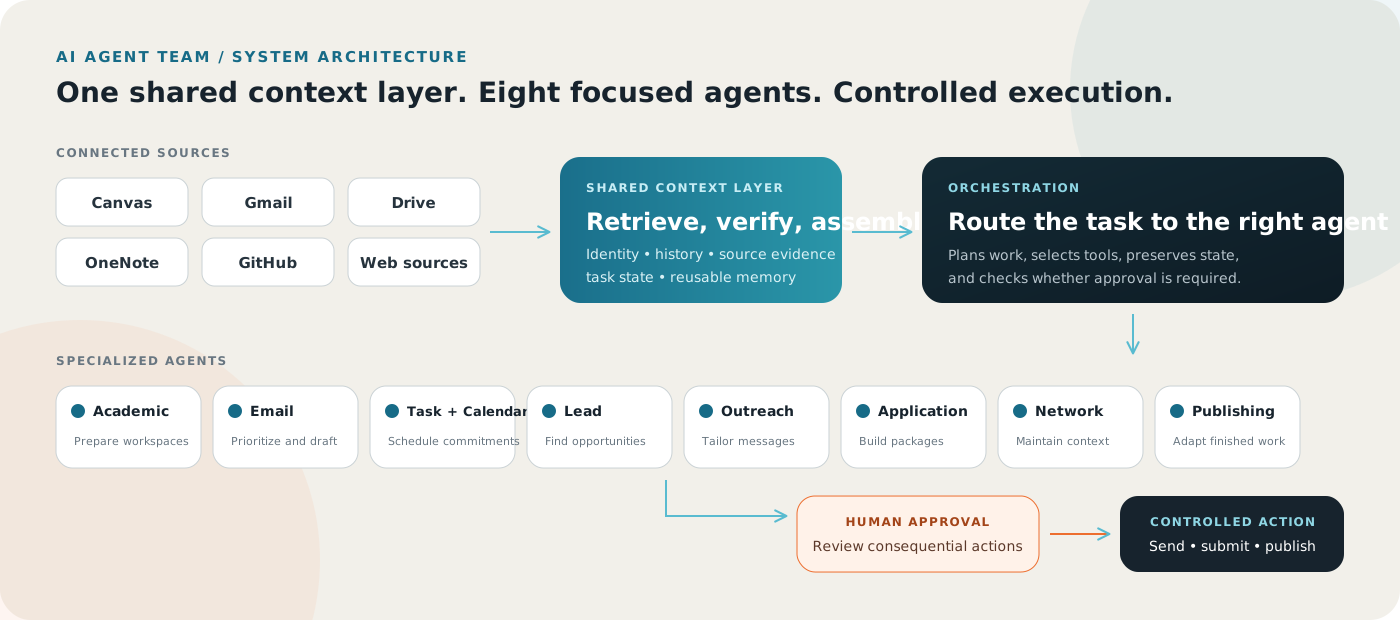
Eight specialized agents assemble context from connected tools, prepare academic and career work, and hold consequential actions for review.
To reduce time spent reconstructing context across email, coursework, applications, and notes while keeping the final say over consequential actions.
Eight agents, each with a defined job
Scroll through the agents to see what each one reads, the work it prepares, and the action boundary that keeps the user in control.
Turn an assignment into a prepared workspace.
The academic agent reads the assignment, finds relevant course material, and assembles the references needed to begin. It reduces the time spent reconstructing context before the actual problem solving starts.
- Inputs
- Canvas, Drive, OneNote, local files
- Output
- a linked task workspace
- Boundary
- source material stays traceable
Prioritize communication and prepare replies.
The email agent identifies messages that need a response, groups related threads, and drafts replies using the conversation history and calendar context. Each draft is presented for review before sending.
- Inputs
- Gmail messages, thread history, calendar context
- Output
- action queue and contextual reply drafts
- Boundary
- approval required before sending
Convert incoming commitments into scheduled work.
The task and calendar agent reads incoming email alongside assignments, application records, and the calendar. It extracts concrete actions such as replies to send, approaching internship deadlines, and due assignments, attaches source links and due dates, and adds them to the task list or schedule.
- Inputs
- Gmail, Canvas assignments, job deadlines, calendar
- Output
- reply tasks, deadline reminders, assignment tasks, calendar entries
- Boundary
- every item links back to the message or source that created it
Convert broad research into qualified opportunities.
The lead agent searches for companies, programs, and roles that match defined interests, then structures each result against consistent criteria instead of returning an unranked list.
- Inputs
- search criteria and preferred domains
- Output
- sourced, ranked opportunity records
- Boundary
- evidence retained for every recommendation
Prepare outreach that reflects the recipient and context.
The outreach agent combines a selected lead with relevant project experience, recent context, and a clear reason to connect. It drafts the message and follow-up sequence, then stops for review.
- Inputs
- lead record, portfolio evidence, contact context
- Output
- tailored outreach and follow-up plan
- Boundary
- no message is sent automatically
Build a truthful application package from one source of record.
The application agent maps a role description to verified experience, identifies gaps, and prepares role-specific materials without inventing qualifications. The final submission remains a deliberate user action.
- Inputs
- job description and verified experience
- Output
- tailored resume notes and application checklist
- Boundary
- no fabricated claims or automatic submission
Maintain relationships as an ongoing system.
The network agent organizes people, past interactions, promised follow-ups, and useful reasons to reconnect. It turns relationship context into a manageable queue rather than a memory exercise.
- Inputs
- contacts, meetings, prior communication
- Output
- follow-up prompts and relationship context
- Boundary
- the user chooses when and how to engage
Translate finished work into channel-specific communication.
The publishing agent converts project updates into drafts for different audiences while preserving the underlying technical facts. It supports editing and scheduling, but publication requires explicit approval.
- Inputs
- project notes, media, and audience
- Output
- channel-specific drafts
- Boundary
- approval required before publishing